FIELD NOTES
22 August 2026・Field Note 01
How to Make Your Yard More Bird-Friendly:
7 Small Ways to Invite More Life Home
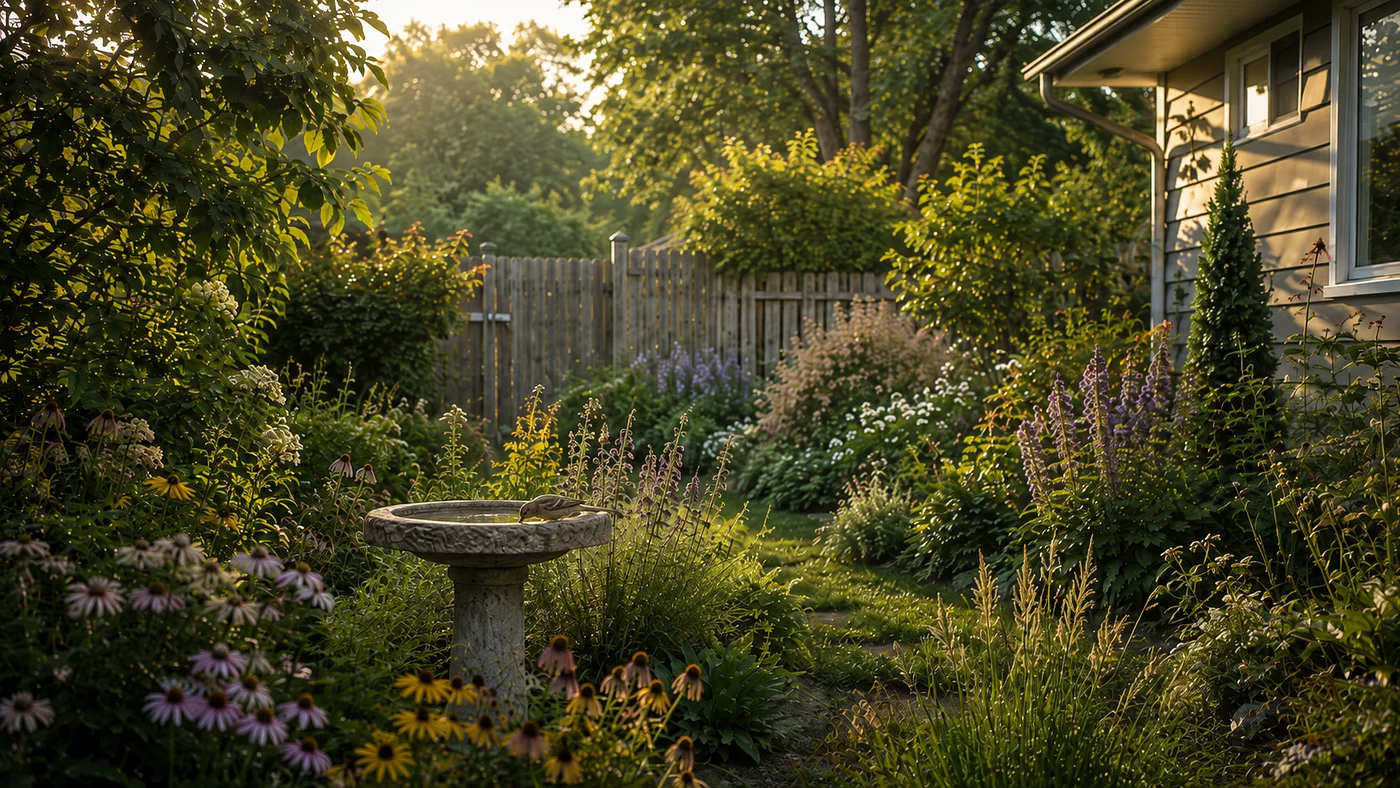
A bird-friendly yard rarely begins with a grand plan.
More often, it starts with something small, such as one native shrub near the fence, a shallow dish of clean water, a few seed heads left standing after summer, or a feeder watched over morning coffee.
Then one day, you begin to notice more movement in the branches. A goldfinch lingers a little longer. A chickadee disappears into the shrubs. A robin finds the birdbath before you do.
No, the yard has not become wilderness. It has simply become a little more useful to the lives already moving through it.
Now that is the encouraging part. You do not need a large property, an elaborate landscape plan, or a perfectly “wild” garden to make more room for birds. Even modest changes can provide food, water, shelter, and safer places to visit.
Here are seven small places to begin.
1. Plant Something Native
If you make only one change, adding a locally native plant is a very good place to start.
Native trees, shrubs, grasses, and flowers can provide birds with much more than attractive landscaping. Depending on the plant, they may offer seeds, berries, nectar, shelter, nesting structure, and native insects, which are especially important.
Many birds depend heavily on insects when raising their young. Native plants support the caterpillars and other small creatures that form part of that food web. Audubon recommends choosing locally native plants suited to the particular light, soil, and moisture conditions in your yard.
You do not have to replace everything at once.
Start with one native shrub. Add a few flowering perennials to an existing bed. Replace a small patch of lawn with plants suited to your region.
A little habitat is still habitat.
2. Add Water
Food gets much of the attention in backyard birding, but birds need water too, for drinking and bathing.
A simple, shallow birdbath can be enough.
Place it where birds have a reasonably clear view of their surroundings and where nearby vegetation offers some refuge. Keep the water fresh and the bath clean, especially in warm weather.
Audubon identifies water as an often-overlooked year-round resource and notes that even simple birdbaths can make a yard more useful to visiting birds.
There is no need for an elaborate fountain unless you want one.
A modest basin, regularly cleaned and refilled, can become one of the liveliest corners of the yard.
And perhaps one of the nicest things about adding water is that it asks something simple of us: refill it, step back, and see who finds it.
3. Give Birds Somewhere to Hide
A wide-open lawn may look tidy, but birds often need places where they can disappear.
Shrubs, small trees, taller grasses, and layered planting provide cover from weather and predators. They also create more of the vertical structure birds naturally use for perching, resting, foraging, and nesting.
Think of your yard in layers:
low plants near the ground, flowers and grasses above them, shrubs beyond those, and perhaps trees overhead.
You do not need every layer everywhere. Even one dense shrub can offer something a bare stretch of lawn cannot.
Audubon recommends varying plant shapes and heights so a garden provides both food and refuge throughout the year.
A good bird garden is not only somewhere to eat, but somewhere to feel safe enough to stay.
4. Leave a Little of the Garden Standing
There is a difference between a neglected yard and a yard that has been allowed to keep some of its usefulness.
After flowers fade, seed heads can remain a source of food. Fallen leaves shelter insects and other small organisms. Hollow or standing stems may provide overwintering habitat. A small brush pile can offer cover.
Audubon specifically recommends leaving some leaves, seed heads, woody debris, and other natural material in place rather than cleaning every bed down to bare ground.
That does not mean abandoning the garden.
Paths can still be clear. Beds can still have shape. Invasive plants can still be removed.
The goal is simply to leave a little more behind.
Perhaps the most bird-friendly corner of your yard is not the one you worked hardest on, but the one you decided not to tidy quite so completely.
5. Make Feeders Helpful, Not the Whole Habitat
A feeder can be a wonderful invitation.
It brings birds close enough to observe their colors, habits, and small daily dramas. It can also provide supplemental food at demanding times of year.
But a feeder works best as part of a larger habitat rather than as the habitat itself.
Native plants, shrubs, seeds, berries, insects, and water provide resources that a tube of sunflower seeds cannot replace.
If you do feed birds, cleanliness and placement matter. Feeders should be cleaned and maintained regularly, and their location should take nearby windows into account. Audubon recommends placing feeders very close to windows—less than about three feet away—or taking other effective measures to reduce collision risk.
The feeder may be where you watch the birds. The rest of the yard is where many of them actually live.
6. Make the Yard Safer
Inviting birds into a yard also means thinking about what might put them at risk.
Windows are one of the most important hazards around homes because reflections of sky and vegetation can look like open habitat to a flying bird. Exterior screens, properly spaced window markers, and thoughtful feeder placement can help make glass more visible.
Outdoor cats are another serious threat to birds, particularly birds feeding or fledging close to the ground. Keeping cats indoors, or providing enclosed outdoor access such as a catio protects birds while also keeping cats safer.
It also helps to use pesticides sparingly. A bird-friendly garden is, to some extent, a bug-friendly garden: insects are part of the food web that supports many birds.
Making a yard inviting is only half the equation. Making it safer matters too.
7. Start Small—and Watch What Changes
It is easy to turn habitat gardening into another list of things we are supposed to do perfectly. It does not need to become that.
You can start with one corner.
Plant one native species. Put out clean water. Leave one patch of seed heads standing. Add a shrub near an open area. Make one troublesome window safer.
Then watch.
What visits the flowers? Who uses the water? Which birds pause in the shrubs before approaching the feeder? What changes as the seasons move through the yard?
Audubon notes that even small patches of habitat can provide useful food and refuge, particularly for birds moving through developed landscapes.
A bird-friendly yard is not really a finished project. It is a relationship that develops slowly between the place you live and the life already around it.
A Little More Life, Close to Home
A yard does not need to be perfect to be generous.
A few native plants can feed insects and birds. A shallow basin can become a place to drink and bathe. Shrubs can offer shelter. Seed heads can remain standing. A feeder can become part of a larger, safer habitat.
None of these things is dramatic by itself. Together, however, they begin to change what a yard can be.
And perhaps that is the simplest way to think about making room for birds: not as creating something entirely new, but as offering a few more invitations.
Plant something useful.
Leave something standing.
Put out some water.
Then sit somewhere quiet and notice who comes.
Wear the Idea
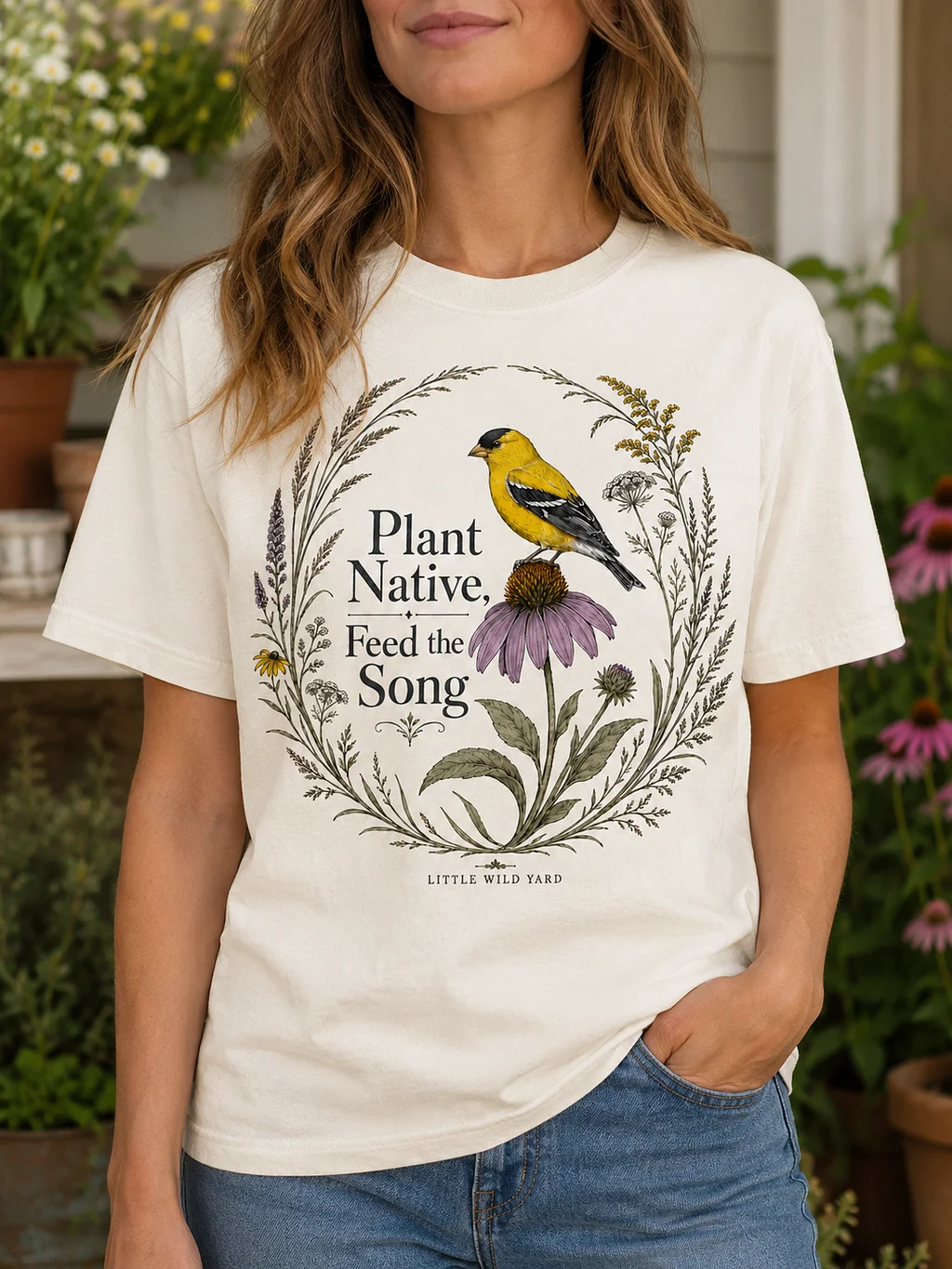
Plant Native, Feed the Song grew from the same simple connection at the heart of a bird-friendly yard: what we plant close to home can help support the birds that live there too.
For people who plant with the songbirds in mind, explore Plant Native, Feed the Song from Little Wild Yard.